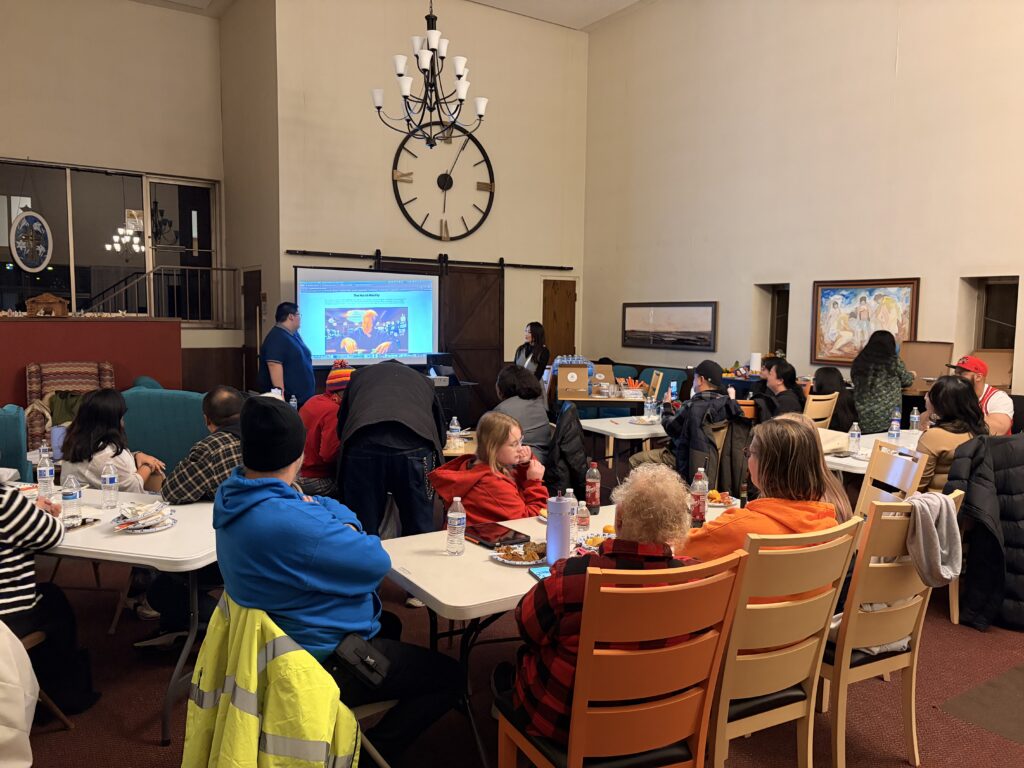
 Asian Media Access conducted the third edition of the e-Magine initiative from September 2025 through January 2026. This program provides training in generative artificial intelligence (AI), digital marketing, website creation, and professional development.
For this cohort, Asian Media Access partnered with an organization to support individuals on their recovery journey from substance use and alcohol addiction. Many participants also faced additional challenges, including homelessness, incarceration, abuse, and unemployment. The e-Magine program offers a supportive environment where participants can build stability, explore innovative technologies, and develop work-readiness skills.
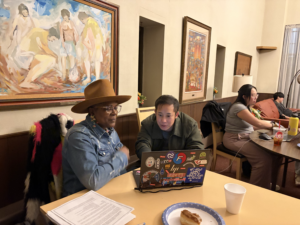 The cohort also included individuals with prior experience in technology-related fields who were seeking to expand their skill sets and clarify their career paths. Despite their different backgrounds, all participants have faced unique personal challenges and circumstances. The program created a space for them to share their stories, exchange ideas, and discover new opportunities.

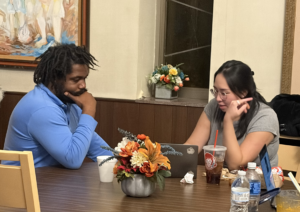
 Because AI is considered a relatively new field, it creates a more even-level playing field for learners of different ages and experience levels. The program is structured around three main components: AI generation, website development, and digital marketing. All their AI-generated images, videos, podcasts, music, and infographics are tied back to mental wellness.
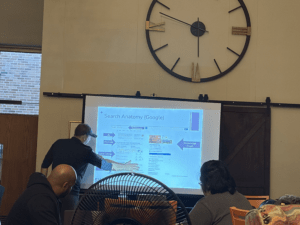 Most participants had little to no prior exposure to tools such as NotebookLM, Suno, and NightCafe.The program’s comprehensive curriculum introduces participants to generative AI tools, helping them build confidence in using these technologies. Participants learn how to create AI-generated images and incorporate them into graphic design projects, as well as how to use AI-generated content to strengthen their marketing and social media presence.
A key emphasis of the program is that AI is meant to enhance, not replace human efforts. As one instructor explains, “We guide AI, it does not guide us.” Participants learn that their critical thinking, creativity, emotional intelligence, and personal perspectives remain central, with AI serving as a tool to amplify these strengths. Throughout the course, they develop the ability to use AI intentionally and effectively across different platforms.
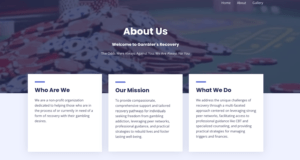 As a final project, each participant creates a website that either provides resources and services or serves a platform to share personal stories. For example, one participant developed an informational website focused on gambling addiction and its impact on mental health. They noted that gambling addiction is “an issue that often goes unnoticed or underestimated, but is more serious than many people realize.” The site is designed to educate and empower individuals to seek support: https://aidigital.amamedia.org/rustypech/
 Their content shows how compulsive gambling is a continual chase for wins but often ends in losses of savings, relationships, and stability. The participants used AI to help them visually depict the progression of addiction from financial stress, relationship breakdown, and the mental toll of the cycle. A part of the course is to help participants find a cohesive theme and style. Participants learn prompt engineering, which helps fine-tune and train different models to get desired outputs. When telling a story, it is important that images, videos, and graphics have a consistent visual style for smooth storytelling and tone.



A key deliverable shared on the website is a generated podcast. The gambling addiction podcast talks about different styles of gambling, including modern ways such as online gambling that provides “instant 24 access”. The participant used AI to develop a conversational-style podcast that focuses on informing and persuading listeners.
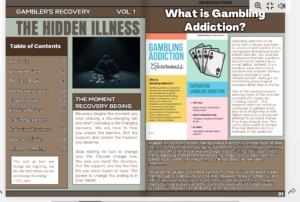
Another key deliverable is the e-magazine. The one produced by this participant is titled The Hidden Illness: Breaking the Cycle of Gambling Addiction. They applied multiple tools from the course to create images, write articles, design infographics, and develop the overall layout.
Upon completion, participants earned several credentials, including badges from Crown College and Metropolitan State University.
Overall, the e-Magine program equips participants with the skills to use AI as a tool to enhance their workflow while relying on their own creativity, judgment, and lived experiences. The curriculum emphasizes the ability of AI and how to use it to support skill development and build on job readiness. After our digital marketing training, this participant had launched a LinkedIn account, generated their professional headshot, and gained thousands of views on their weekly posts. Additionally, through the program’s work-readiness training, this individual was offered a position as a marketing director.
Check out other samples of great participant works: