Youth mapped the neighborhood’s food resources in 2025 and interviewed 194 neighbors in 2026. Here is what they found about accessibility, affordability, and sustainability.
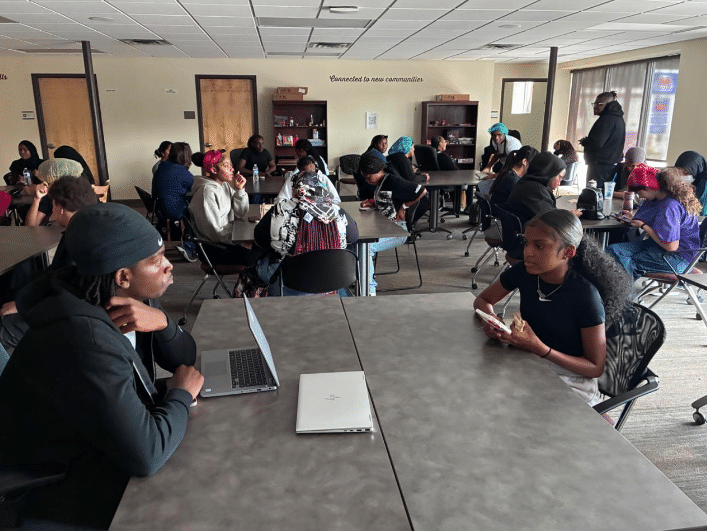 For the past two summers, young people working with Asian Media Access (AMA) and the SankofaPOWER food-access effort have walked North Minneapolis with a clipboard and a question: what does it take for a family here to put fresh fruits and vegetables on the table? Their work, together with AMA’s North Minneapolis Produce Landscape Report and the SankofaPOWER Food Security survey, gives a clear picture of three challenges and a path forward.
The Summer Youth Work
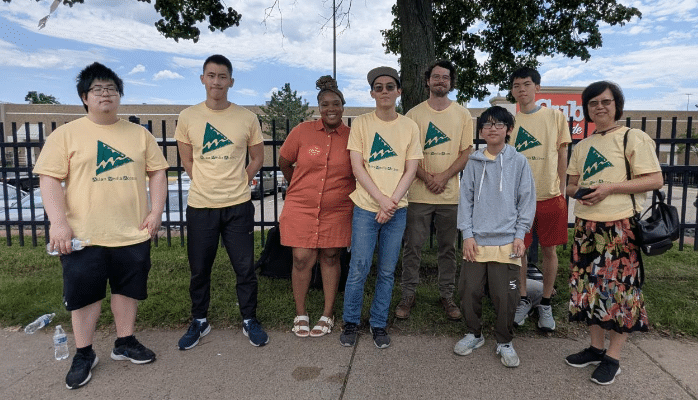
- Summer 2025 — mapping what’s there. Youth researchers built a food-resource registry for the Near North (55411) and Camden (55412) neighborhoods. They documented about 70 food shelves, grocery stores, restaurants, meal programs, and benefit programs. The same summer, the SankofaPower Food Security Initiative surveyed 57 residents about fresh-food access, cost, and community growing.
- Summer 2026 — listening to neighbors. From June to August 2026, youth researchers conducted 194 community interviews. They asked residents how food connects to health, where they get fresh produces, what gets in the way, and whether a community food map like SankofaPOWER database map may help.
Why It Matters: The Health Picture
Diet-related disease weighs heavily on North Minneapolis. According to Hennepin County’s SHAPE 2022 data about 72.2% of adults in Camden and Near North are overweight or obese, compared with 59.4% across Hennepin County. Diabetes affects 11.4% of residents, compared with 7.6% countywide. Residents understand the link: in the 2026 interviews, more than a third tied food directly to health, and nearly half talked about cooking with their families.
Accessibility: Knowing Where to Go
 5% of residents interviewed in 2026 get fresh food at a farmers’ market. Most (73%) rely on a grocery or big-box store.
- 0% of residents know about the farmers’ markets or stands in 55411/55412 accepting SNAP or Market Bucks.
- 92% of 2025 survey respondents rated walkable access to fresh food as highly desirable.
Fresh food exists, but residents don’t always know where it is or where their benefits work. Residents strongly supported a community food map; 84% of those interviewed in 2026 were positive about one. Many added that it must show affordable options and come in printed form for neighbors who don’t use computers.
Affordability: Stretching Every Dollar
- 42% of 2026 interviewees named price as what makes fresh food hard to get; 32% named transportation or distance.
- 40% of 2025 survey respondents were very concerned about affording fresh food.
- 8% of residents from both years, preferred a voucher to buy fresh produce at stores or farmers’ markets.
 Programs that make produce more affordable are already available: Market Bucks, which match SNAP dollars at farmers’ markets; the City of Minneapolis Fruit and Vegetable Voucher Program; and the Farmers Market Nutrition Programs for WIC families and seniors. Yet not one of the 194 residents interviewed mentioned Market Bucks or a voucher. Closing that gap is one of the simplest ways to make fresh food more affordable.
Sustainability: Growing It Here
- 85% of 2025 survey respondents rated local food production as very important.
- 200+ active garden plots already grow food across North Minneapolis community sites.
Neighbors want food grown close to home, including the vegetables and herbs their families cook with, and only about a third found culturally familiar, affordable food very easy to get. Residents named gardens, gardening skills, volunteer time, and church networks as assets ready to use. The next step is turning that growing capacity into neighborhood stands where residents can shop with their benefits.
 What Comes Next
Building on the youth findings, AMA and our partners are working on four fronts: awareness, through a “Food is Medicine” campaign; accessibility, through the SankofaPOWER database map of every place in 55411/55412 where benefits can be used, with Frogtown/Rondo Black Church Alliance and Project Sweetie Pie; affordability, through hands-on help signing up for Market Bucks and other programs; and sustainability, by helping community gardens and cultural growers, with the Minnesota Farmers’ Market Association, open stands that accept SNAP and Market Bucks, to expand economic power.
Bringing It to the Table: The September 1 “Food is Medicine” Festival
Research only matters if it reaches people. That is why AMA keeps finding new ways to connect residents with the community gardens, food shelves, markets, and benefits already around them.
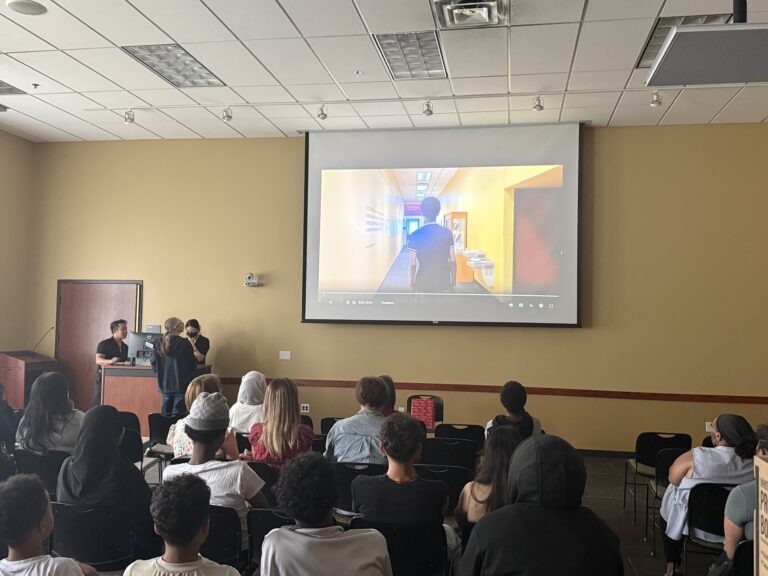
On September 1, the “Food is Medicine” Festival at the North Regional Library put the youth findings into practice. Its four back-to-back sessions used traditional healing knowledge, hands-on food preparation, and open conversation, each offered bilingually, so health information felt familiar and welcoming rather than clinical:
- Bicultural Healthy Living Concepts bridged wellness traditions from participants’ home cultures with everyday health habits in Minnesota.
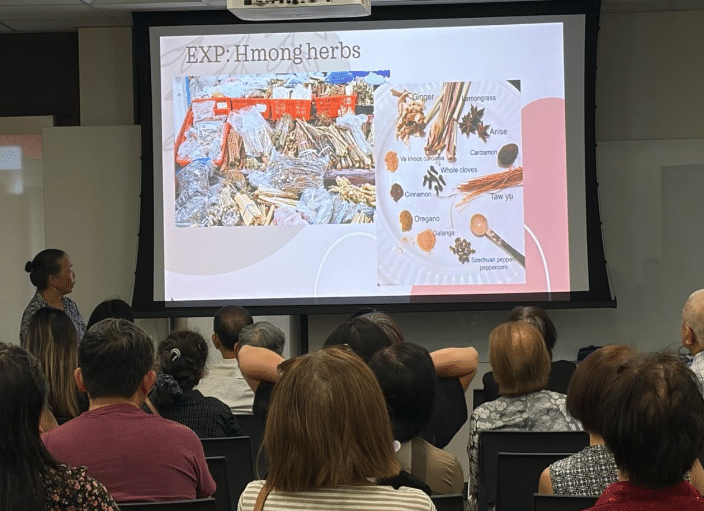
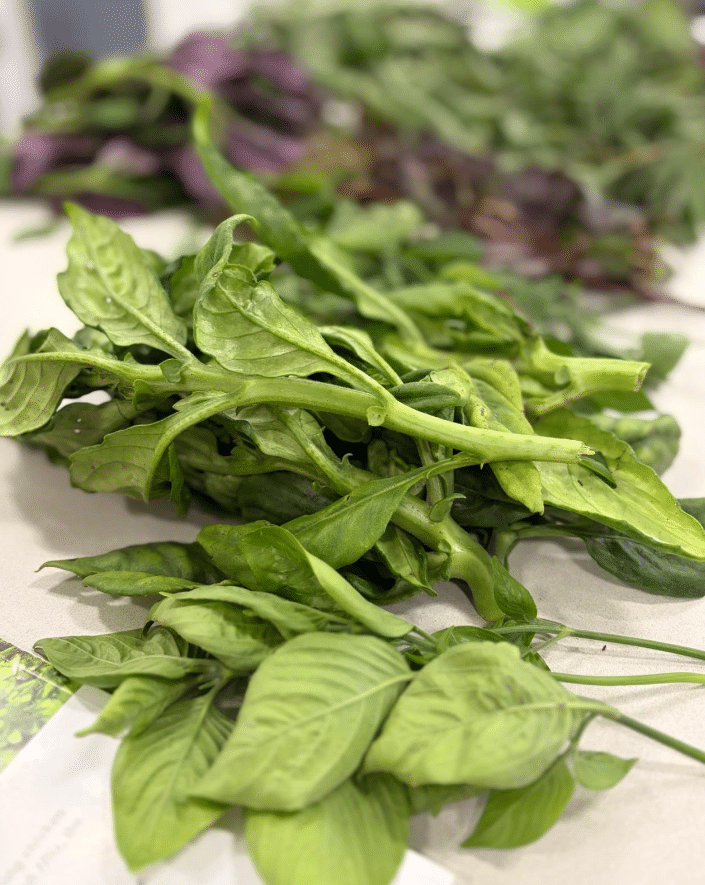
- Herbal Medicine, led by Hmong Herbalist May Lee, showed how ordinary local plants offer real health benefits. Participants touched, smelled, and tasted the herbs.
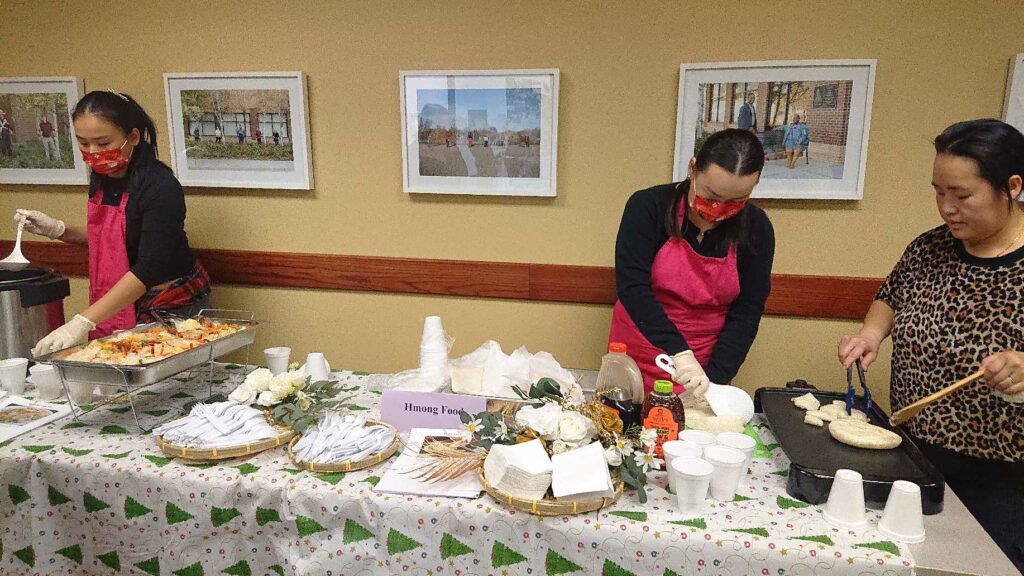
- Plant-Based Spring Roll Making, led by Meiping Liu, had everyone rolling their own and sharing diverse plant-based dishes in a communal meal setting.
- Food is Medicine, led by Dr. Jenyu Lai, closed the evening with a conversation about how everyday food choices affect how we feel, and about residents’ own access to fresh fruits and vegetables.
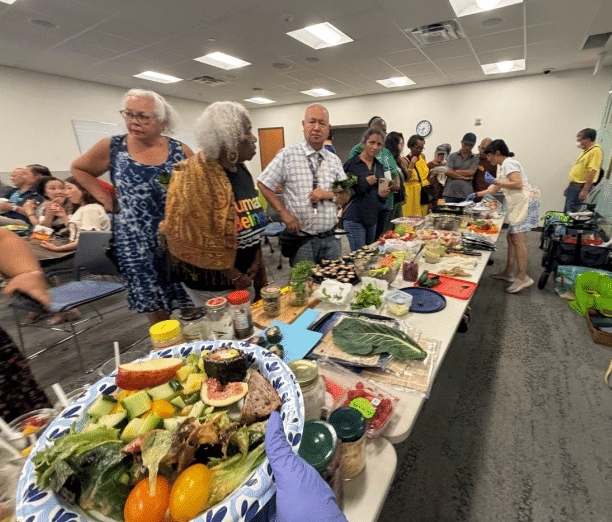 The lesson was clear: people learn best when they can touch, taste, and make food themselves. Hands-on sessions built a sense of ownership and confidence that no lecture could, and AMA will carry that approach into the year ahead.
The youth found the gaps. The neighbors named the needs. Now our work is to close them, one garden stand, one sign-up, and one shared meal at a time. AMA thanks the young researchers who carried this important work forward, and every neighbor who shared their story.
We’ll see you at the next TABLE.
Sources: AMA, North Minneapolis Produce Landscape Report (2025), including SHAPE 2022 data; SankofaPower Food Security Initiative, Community Survey Findings (June 2025, n = 57); SankofaPOWER food-resource registry (June 2025); SankofaPower summer community interviews (July–August 2026, n = 194; figures approximate, coded by keyword). Contact: Asian Media Access, 2418 Plymouth Ave N, Minneapolis, MN 55411 · 612-376-7715.