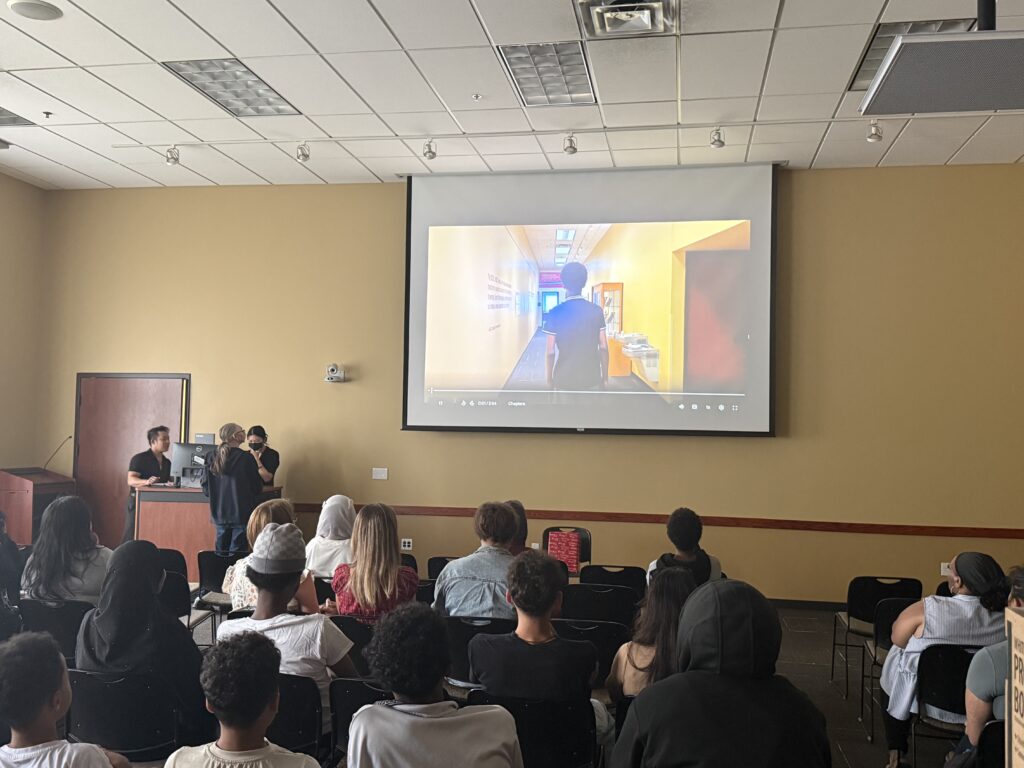
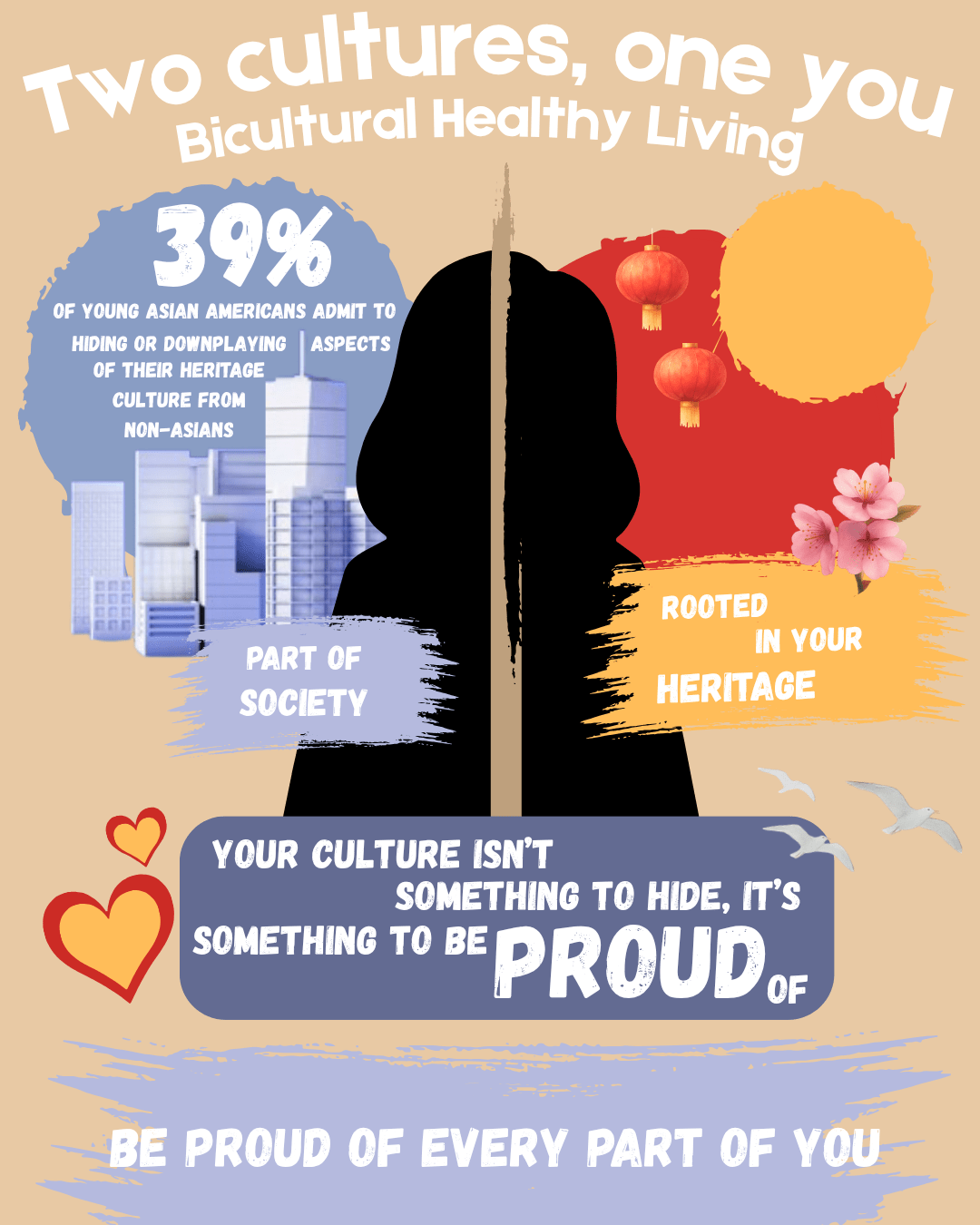
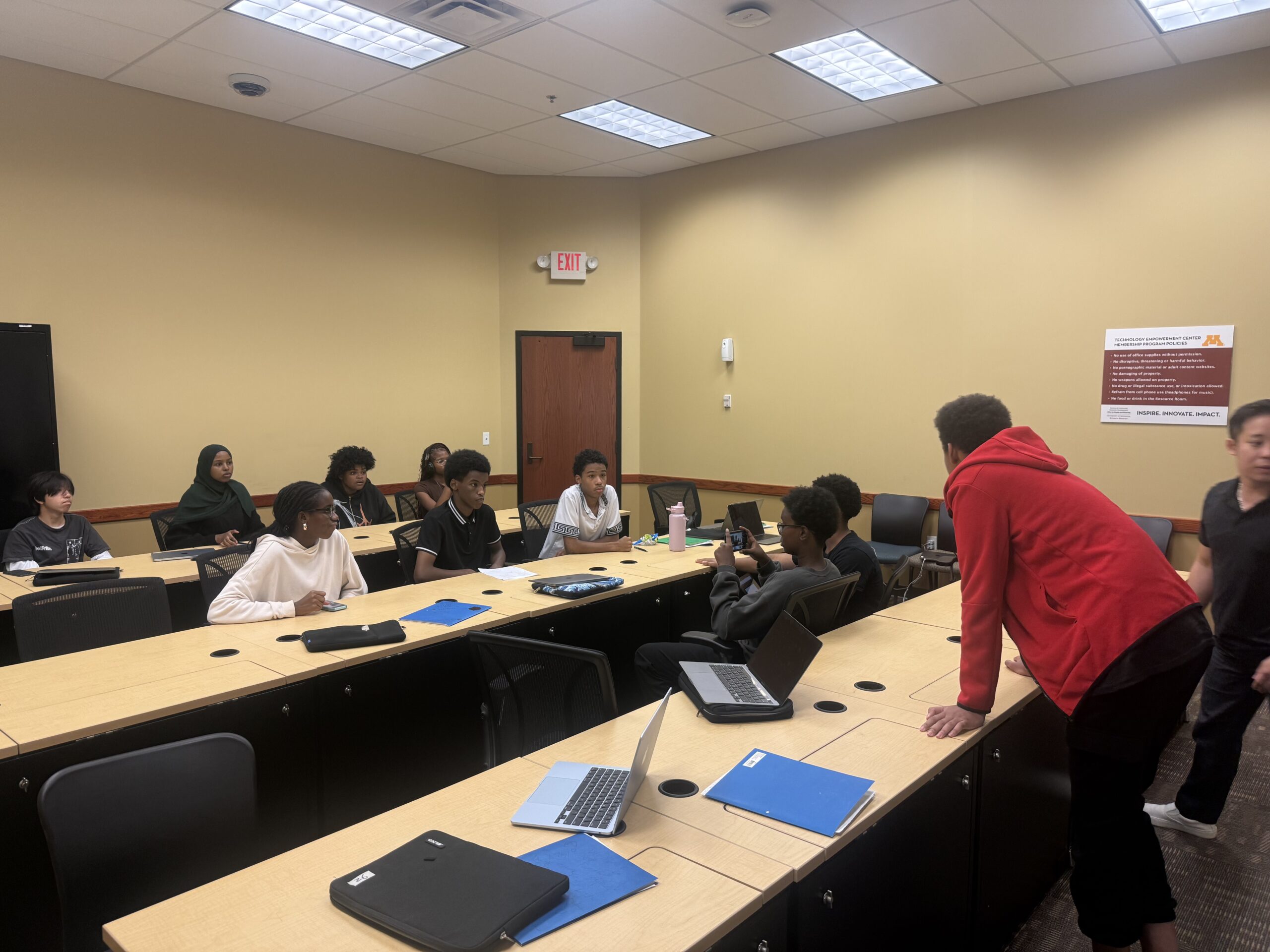
 To advance workforce equity and community engagement, AMA partnered with the Step Up program to pair youth with foundational job experiences, technical training, and intentional mentorship. Over a nine-week internship, interns developed professional communication skills and created media projects addressing local community challenges. Centered within this curriculum was Bicultural Healthy Living, a program designed to help youth navigate and embrace their dual cultural identities. Throughout the program, youth completed deliverables about this topic to greatly improve their learning and share widely with their community members.
Bicultural Healthy Living emphasizes the ability to maintain strong balance and ties to both one’s heritage culture (family roots) and host culture (current environment). Youth often face intense pressures to give up on their heritage culture to fit into the dominant host culture, a process which is linked to negative physical and mental health outcomes. The program counters these pressures by reinforcing the idea that having more than one cultural identity is a strength. Interns are encouraged to embrace both of their cultural identities rather than feeling forced to choose between them.
 To measure the growth and understanding of Bicultural Healthy Living, a pre- and post-questionnaire was administered to the interns at the beginning and end of the 6-week program. The Bicultural Healthy Living survey examined youths’ bicultural development across five areas: communication, attitudes, knowledge, roles, and beliefs. Participants responded to each statement using a five-point scale ranging from Strongly Disagree to Strongly Agree.
A total of 29 pre-surveys and 25 post-surveys were available for this preliminary analysis. Overall, youth reported relatively strong bicultural attitudes and beliefs at both the beginning and end of the program. While participants entered the program with relatively strong bicultural attitudes, post-survey results showed consistent gains across all five categories. The clearest gains were in communication and attitudes. Youth ended the program closer to the Agree level across the five survey areas, with smaller but still positive changes in knowledge, roles, and beliefs.
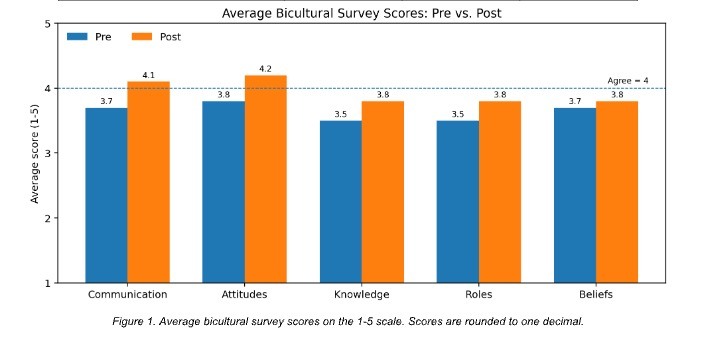
Communication had the highest impact, with the most significant overall growth, increasing confidence in discussing cultural misunderstandings between heritage culture and mainstream American culture. Bicultural communication involves awareness and understanding that people from different backgrounds have distinct verbal styles, nonverbal gestures, social norms, and more. For example, in some cultures, eye contact can be viewed as respectful and polite, whereas in other Asian countries, eye contact is considered challenging and threatening. Bicultural teachings recognize the cultural differences and help individuals learn to embrace this quality. Youth were taught to clarify misunderstandings and help build mutual respect and bridge cultural differences, and confidence in communicating ideas effectively across cultures grew from 76% to 88%.
Youth already reported relatively positive attitudes before the program, but several measures improved further. A positive feeling towards both cultures increased from 69% to 88%. Youth demonstrated greater comfort viewing their heritage and host culture as complementary parts of their whole identity. Interns reported a stronger refusal to abandon their heritage in order to fit into mainstream culture. Typically, heritage culture is linked to family and home, whereas host culture is associated with community spaces such as school and work. Navigating between the two cultures as separate can feel difficult, but youth were taught to balance their two cultures and cultural influences such as language, food, music, and more.
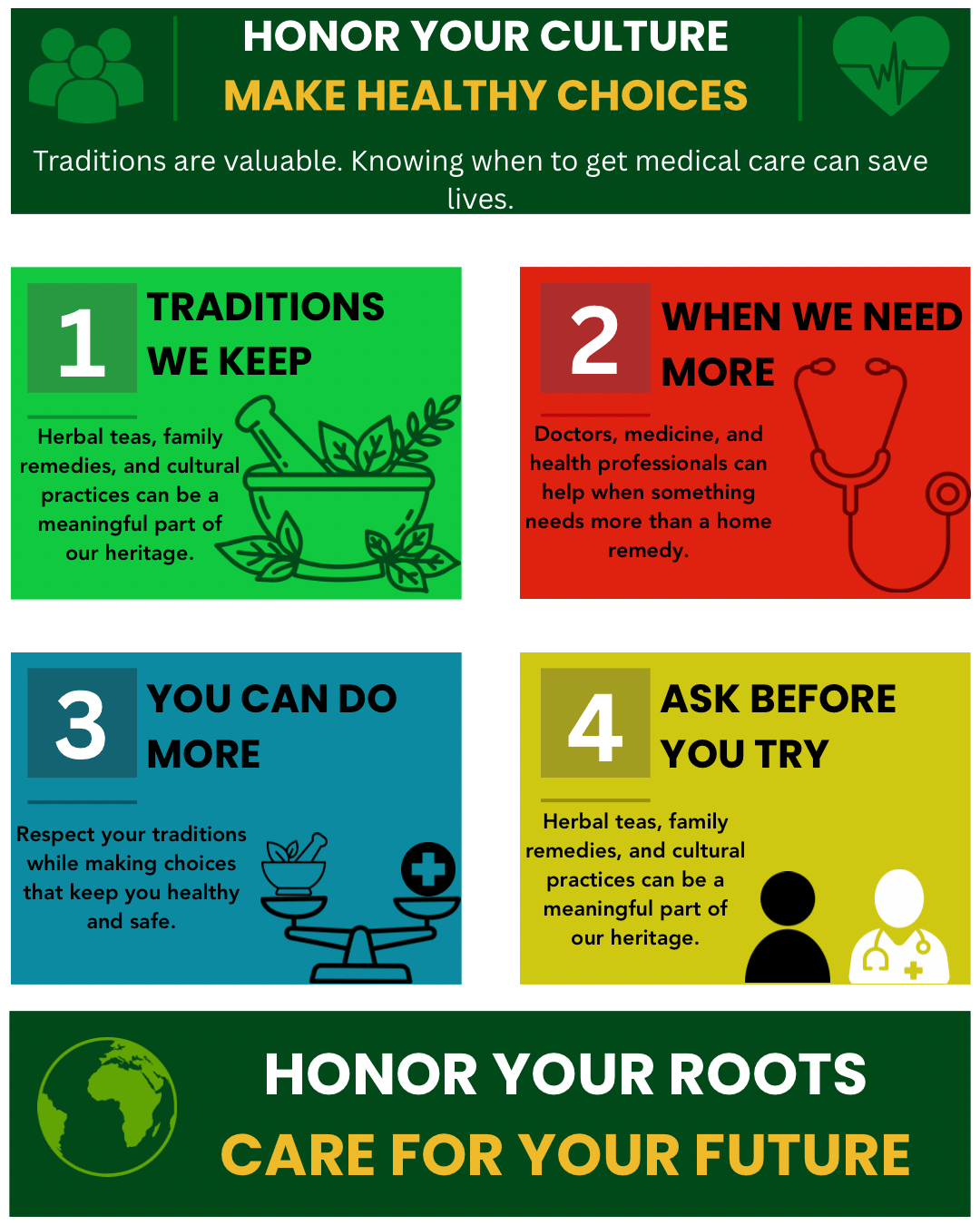 The belief that Biculturalism doesn’t require identity compromise rose from 72% to 84%. One of the main ideas of Biculturalism is that there are two cultures to draw on for resources, rather than just one. Youth were eager to share their similarities in heritage, culture, superstitions, and health remedies when discussing Biculturalism resources. In Hispanic culture, a traditional practice, “limpia con huevo” (egg cleanse), involves rubbing a raw egg over the skin when a person feels sick to ward off the illness. The raw egg draws the illness out like a sponge, then is tossed. Similarly, in Hmong culture, a boiled egg is rubbed across the skin to ease or remove the illness, and it is believed to draw out the negative energy and bad spirit causing the sickness. Although from different heritage cultures, they found similarities to appreciate and learn from, and youth could understand the importance of not giving up on embracing their cultures.
Youth also showed improvement in knowledge of the history of mainstream American culture and their own cultural groups. Overall knowledge scores remained relatively stable, suggesting that gains were stronger in specific areas rather than across every knowledge item. Knowledge of values important to both cultures improved from 66% to 72%.
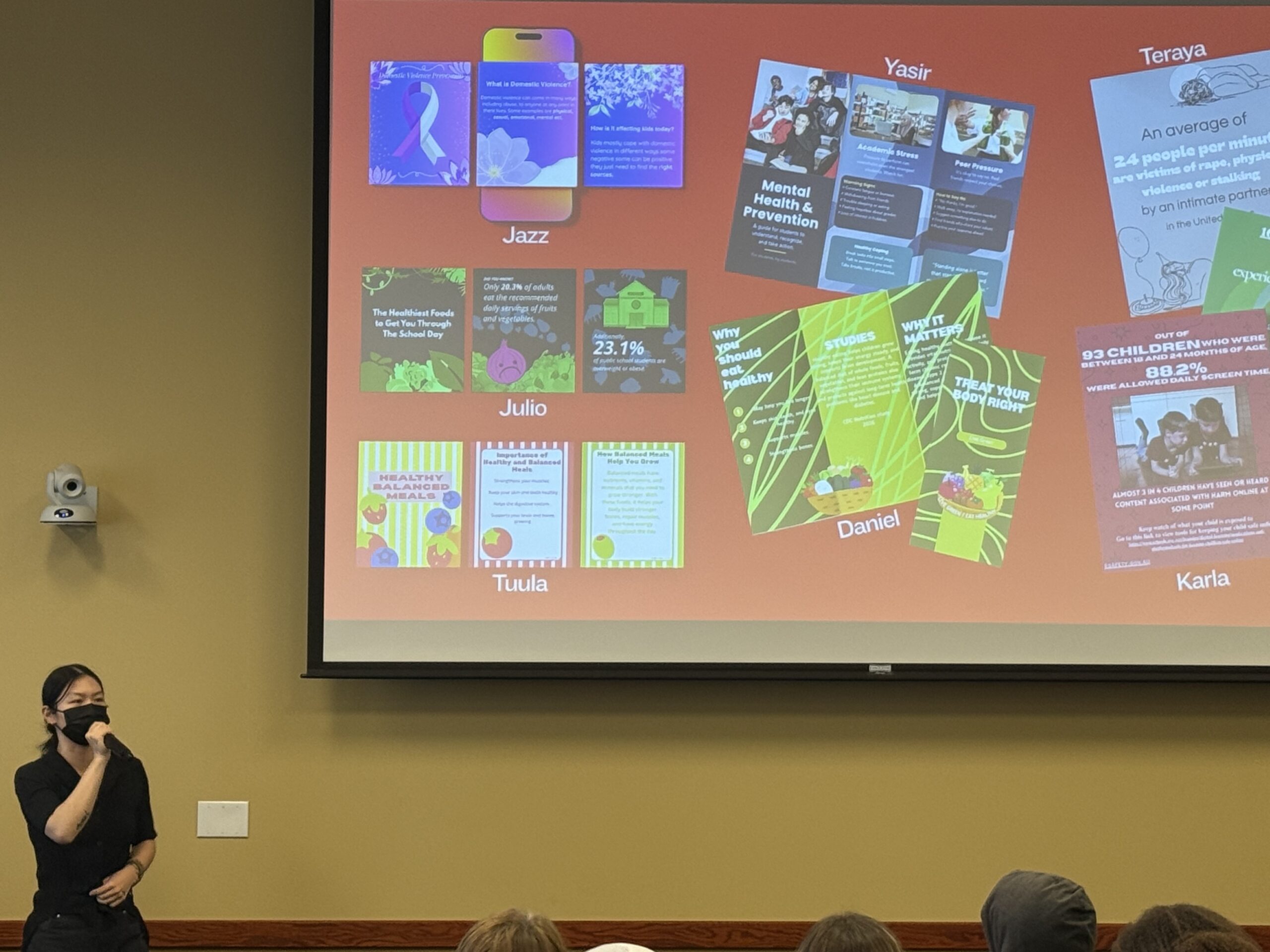 The post-survey showed clear improvement: the nine-week Bicultural Healthy Living initiative successfully equipped youth with practical communication tools and confidence in their identity. By providing a platform to discuss cultural nuances and overcome assimilation pressures, the Step Up and AMA partnership demonstrated that supporting youth in embracing their full heritage yields stronger cross-cultural understanding and personal resilience.
Sometimes navigating between two cultures can be difficult, and the biggest challenge is trying to fit into one culture completely. As youth, there are pressures to assimilate into the dominant host culture, but exposing the Bicultural Healthy Living helps youth understand that they can and should embrace both of their cultures to reach their full potential.