Series Preface: Asian Media Access proudly presents “Calling America HOME” Series, inspired by the resilience and hope shared by immigrants and refugees from all corners of the world who have rebuilt their lives in Minnesota. Through these stories, we invite readers to witness a legacy of survival, determination, and hope against impossible odds.
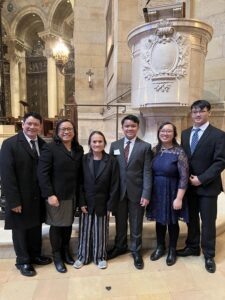
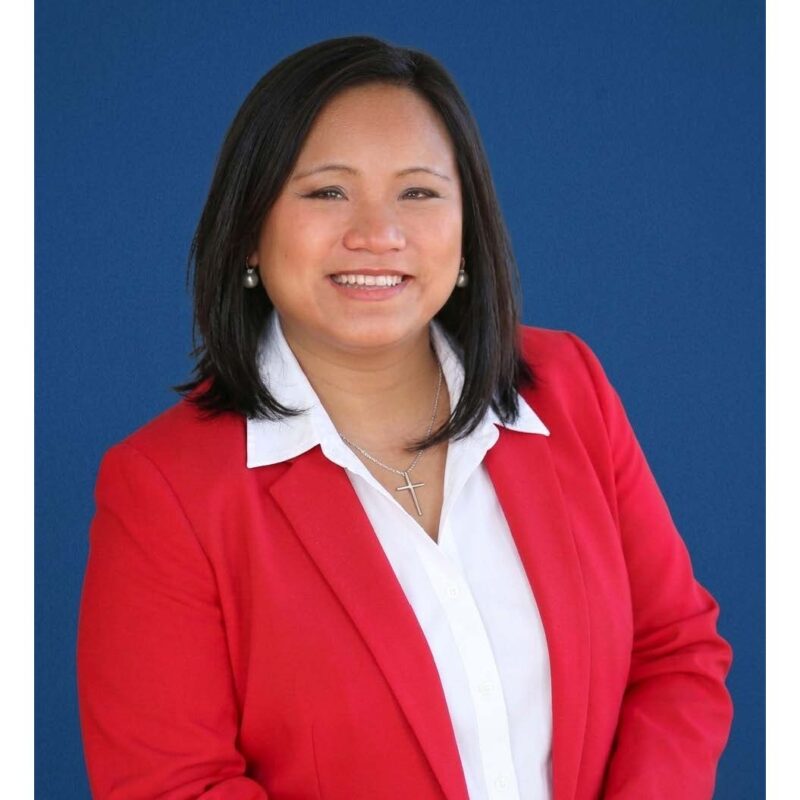
In this edition, we proudly feature Mrs. Julie Trang Le – A Legacy of Integrity, A Life of Service.
Q1. Thank you for speaking with AMA. Can you begin by introducing yourself and describing your journey to Minnesota?
My name is Julie Trang Le. I am a Vietnamese refugee, a mother, an attorney, and a candidate for the United States Congress in Minnesota’s 5th District. But before any of those titles, I was a child sleeping in the back seat of a car on a freezing Iowa night, waiting for a spot in a homeless shelter to open up.
My family’s story begins with my grandfather, Trần Đình Nghị. He served in U.S.-allied law enforcement during the Vietnam War, and after the fall of Saigon in 1975, he was imprisoned for that service. He died in the Kim Sơn detention camp. For nearly twenty years, my family worked to retrieve his remains so we could finally lay him to rest. That long search for closure shaped how I see the world. I learned early that justice can be delayed for a generation — but that does not mean you stop fighting for it.
 My own journey to America began in poverty in Vietnam, followed by eight months in the Bataan Refugee Camp in the Philippines. I arrived in the United States at fourteen, not speaking the language and quickly learning that the “land of opportunity” did not shine equally for everyone. By tenth grade, my life broke open. I became a runaway. I slept in a car through Iowa winters. I drank water to fill my stomach when there was nothing to eat. What saved me was a program called the Bridge Project, which got me a bed at the YWCA homeless shelter. From there I moved into a shared apartment with another runaway, at half rent for kids like us. Eventually I saved enough to get my own place. I have been independent ever since.
I graduated high school a year early because I could not afford to be a full-time student and a part-time worker — I needed to work full-time. From there, I put myself through community college for my associate’s degree, then earned my bachelor’s, then a master’s, and finally my law degree. Every step was juggled between school, work, and family. America gave me the chance, and I took it.
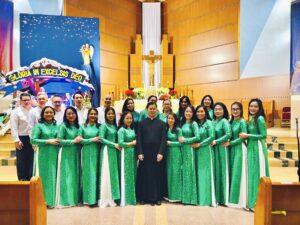
I moved to Minnesota to build a legal career around the people I had once been: workers, immigrants, families in crisis, and people whose voices were drowned out by systems they did not understand. My practice has spanned workers’ compensation, immigration, criminal, and family law. I went on to serve as an Assistant Chief Counsel at the Department of Homeland Security. Then, on January 5, 2026, I went on detail as a Special Assistant United States Attorney with the Department of Justice, handling habeas corpus cases. Along the way, I have served on the Minnesota Board of School Administrators, the Asian Pacific Advisory Board for the Minnesota Office of Ombudsperson for Families, and the Board of Advisors for the Vietnamese Community in Minnesota. I am also a volunteer mediator, a youth leader, and a choir director in my church.
I do not see those roles as separate. They are one continuous answer to the same question my grandfather’s life asked me: what will you do with the freedom others paid for?
Q2. Please share more with us — How did your own cultural identity evolve while working in supporting others? How has that work shaped your sense of belonging in both Vietnamese and American cultures?
My cultural identity has evolved from survival to stewardship. When I first arrived, my identity was shaped by what I lacked — language, money, a stable home. But over years of work — as a general laborer, a Vietnamese translator, a realtor, an independent insurance agent, and a restaurant owner — I came to understand my heritage differently. It was not a barrier to overcome. It was a bridge I could walk across, in both directions.
As a translator, I sat with families navigating the healthcare system and the Social Security Administration. I watched elders try to advocate for themselves through forms written in a language they could not read, and clerks who had no time to slow down. I was the voice in the room when there otherwise would not have been one. As a realtor, I helped first-generation families buy their first homes. As a restaurant owner, I learned that food is the easiest language for strangers to share. People who would never sit down to talk about politics will sit down for a couple of homemade egg rolls (chả giò), a Vietnamese sandwich (bánh mì), or a bowl of phở. Each of those jobs taught me the same thing: Vietnamese-American identity is defined by what I think of as entrepreneurial resilience — the instinct to build something out of almost nothing, and to do it with your family beside you.
 In my Vietnamese heritage, I feel most rooted when I am translating for an elder at a doctor’s appointment, or mentoring youth at church, or sitting on a community board. That is where my values of hard work, sacrifice, and respect for elders came from, and giving back is how I honor my grandfather’s legacy. In my American identity, I feel most rooted in freedom and justice – when I help a family navigate a public system, or stand up for a worker whose rights have been ignored. That is my way of saying thank you to the country that gave me a second chance.
I no longer feel caught between two worlds. I am a bridge between them. Belonging is not about choosing one side. It is about using your lived experience to make sure every family can thrive from here.
Q3. How do you balance cultural authenticity while making your work accessible to others who may not be familiar with your cultural traditions?
I have never believed authenticity and accessibility are at odds. As a refugee, I learned early that while traditions differ, the desire underneath them does not. Every family I have ever met — Vietnamese, Somali, Hmong, white, Black, immigrant or fifth-generation — wants the same things: a safe home, healthy children, and a fair shot.
A few things I have learned about how to build that bridge:
- Lead with values, not just traditions. When I tell my grandfather’s story, I am sharing a Vietnamese family history — but I am also speaking to a universal American value: standing up for what is right, even when it costs you. People from any background can find themselves in that story.
- Interpreting is more than just language translation. My work translating for the healthcare and Social Security systems taught me that real accessibility means breaking down complicated American institutions for newcomers and helping those institutions understand the cultural realities their clients are living through. It runs both ways.
- Food and small business are doorways. Running a restaurant was one of the most effective bridges I ever built. When you invite someone to sit at your table, the walls come down on their own.
- Faith and discipline keep me whole. As a choir director and youth leader, I try to model what bicultural healthy living looks like — the discipline and respect for elders from Vietnamese culture, combined with the American emphasis on individual agency and liberty. Both, not either.
Q4. You have accomplished so much — from arriving in the States to becoming a cultural bearer. What were some of the pivotal challenges you faced in building your life in America?
The hardest moments in my life have not been the ones people read about. The hardest moments were the quiet ones — a freezing night in a car, a long shift after class, a phone call about my grandfather. But there is one recent moment I want to share, because it explains why I am running for Congress.
On February 3, 2026, I attended a contempt hearing in federal court in Minnesota on behalf of the Department of Justice. I had volunteered to help the U.S. Attorney’s Office respond to a flood of habeas petitions during Operation Metro Surge — the immigration crackdown that swept across the Twin Cities. At one point I was personally assigned to more than eighty-five cases.
I walked into that hearing intending to explain to the judge how hard I had been working on every file in his order to show cause. I had been working days and nights. I had no intention of defying the court. The problem was not me. The problem was that I could not get my own client — Immigration and Customs Enforcement (ICE) — to comply with the judge’s orders.
And then the judge questioned my integrity. That broke me. Integrity is the one thing my family carried out of Vietnam. It is the one thing my grandfather died protecting. I could not stand in that courtroom and let it be doubted — not when I had been pulling myself apart trying to do the right thing inside a system that would not let me.
So I told the truth. I told the judge how impossible the position was. I said the system was broken and the job was breaking the people inside it. I believed then, and I believe now, that I owed the court candor. Within hours, I was removed from the detail and returned to Department of Homeland Security. Not long after, my government service ended.
I do not regret a single word of it. That day was the moment my life as a refugee, my life as a lawyer, and my future as a candidate finally met in one place. I had spent my career trying to fix a broken system. I learned, in that courtroom, that some systems cannot be fixed from the inside. They have to be fixed at the policy level.
That is why I am running for the United States Congress in Minnesota’s 5th District. I see the struggles I once lived through reflected in our community every day — families torn apart by detention, neighbors without housing, elders falling through the cracks of healthcare and Social Security, children whose schools are stretched too thin. I have slept in a car. I have skipped meals. I have walked into rooms where no one expected someone like me to be heard. I do not just understand these struggles. I have felt them in my bones.
Q5. Love your statement “The price of freedom and fairness was written in the blood and tears of those who came before me.” Reflecting on that journey, what impacts do you hope to have on the next generation?
When I say those words, I am thinking of three people. I am thinking of my grandfather, who paid for freedom with his life. I am thinking of the fourteen-year-old refugee who got off the plane not speaking English. And I am thinking of the tenth-grader curled up in the back seat of a car on an Iowa night.
My hope for the next generation is that they inherit the freedom we fought for and the resolve to protect it.
I want young people — especially young people who feel invisible, or behind, or like the system was not built for them — to see my story and recognize themselves in it. I was a runaway. I worked through high school. I finished school early because I had to. I went through community college, a four-year degree, a master’s, and then law school, one shift at a time. The Bridge Project gave me a bed when I had nothing. The YWCA gave me shelter. A second-chance apartment at half rent gave me a foothold. Every step was someone else extending a hand, and then me reaching forward to extend mine.
That is what I want to leave behind. Not just policies, though policies matter. I want to leave behind a generation that knows their hardship is not their identity. It is the soil their character grows out of.
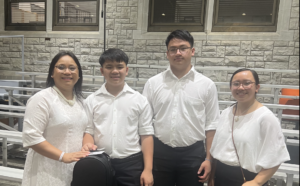
I also want them to know that freedom is not a spectator sport. Through my work with the Minnesota Board of School Administrators, as a youth mentor and choir director, and now through this campaign, I want young people to take their seats at the table. Their cultural heritage is a strength. Their stories matter. And they have a responsibility — the same one I inherited from my grandfather — to be the voice for the unheard in their own time.
Q6. Any final words for our readers?
If I could leave your readers with one message, it would be this: no one’s journey is truly solitary. Everything I have achieved — from surviving the refugee camps to serving as a federal attorney — happened because of faith, community, and the chances this country gave me.
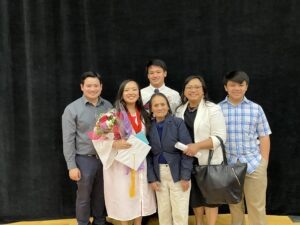
Just as it took my family twenty years to bring my grandfather home, I want all of us to understand that justice takes patience and unwavering commitment. Take pride in your journey. Be grateful for the liberty America provides. Be dedicated to shaping
your community and nation by putting forth the best of yourself
My journey began in the back seat of a car in an Iowa winter. It does not end there. It ends — God willing — with us building a future where every family in District 5 has a seat at the table. If readers want to learn more about my story, my platform, or how to get involved, I invite them to visit julietle4congress.com.