Series Preface: Asian Media Access proudly presents “Calling America HOME” Series – which is inspired by the resilience and hope shared by immigrants and refugees from all corners of the world who have rebuilt their lives in Minnesota. Through these stories, we invite readers to witness a legacy of survival, determination, and hope against impossible odds.
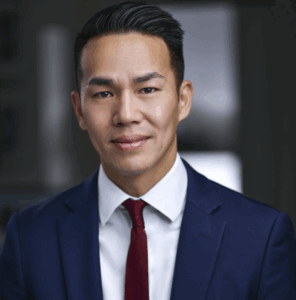
For this issue, we invite Dr. Cong Liu to share his immigration story, intertwined with his music-making journey—how he embraces diverse cultures and art forms to build connections not only across cultures, but also between different ways of understanding the world.
Q1. Thank you for speaking with AMA. Can you begin by introducing yourself and describing your journey to Minnesota?
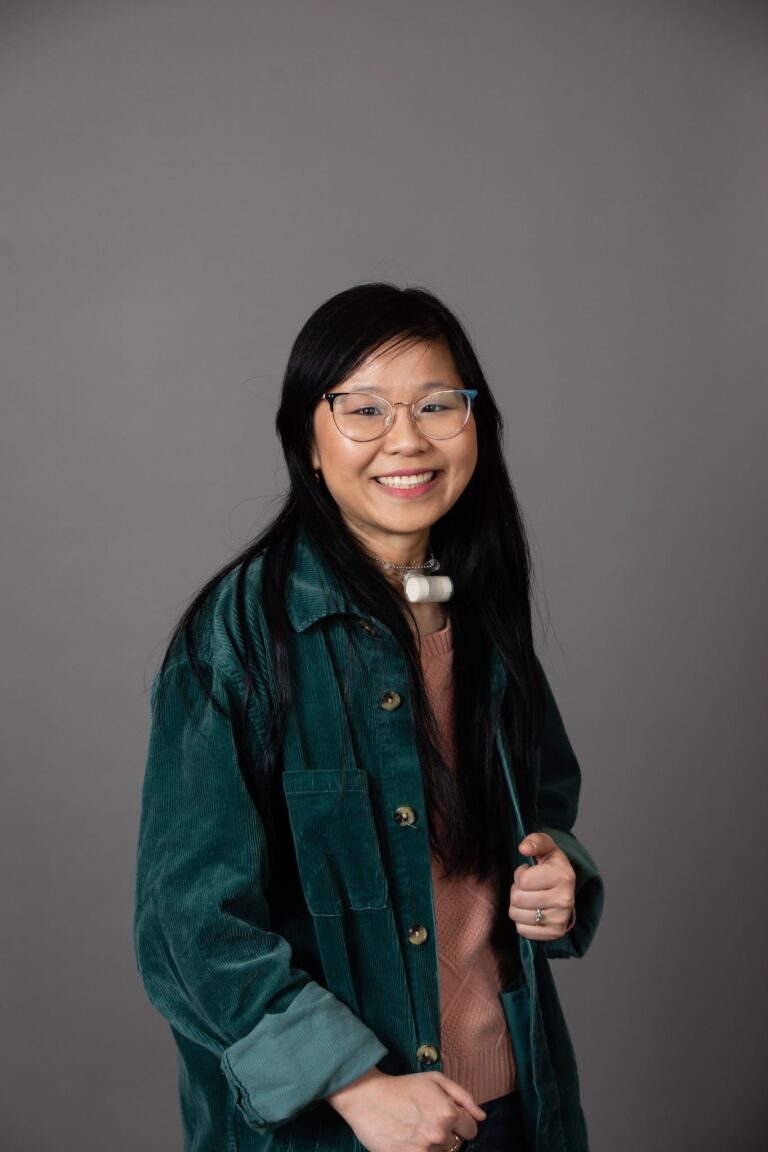
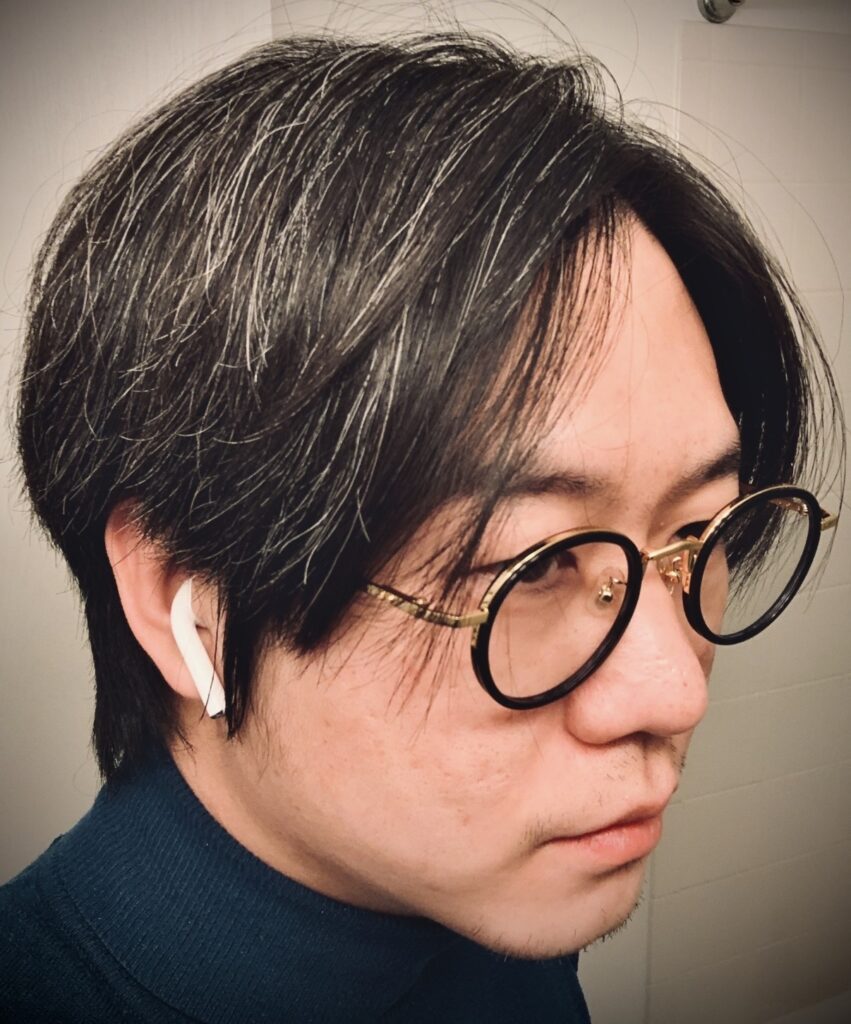
I am Dr. Cong Liu, a composer, educator, and interdisciplinary artist exploring how sound, perception, and technology intersect to shape human experience. My work investigates how music can function not only as an artistic expression, but also as a medium for communication, cultural memory, and emotional understanding.
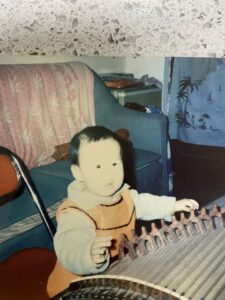
My artistic foundation was deeply shaped by Chinese music traditions. My mother is a guzheng performer, and I grew up immersed in that environment, where music was not something separate from life, but something that naturally existed within it. Through this early exposure, I came to understand sound not only as music, but as a cultural and emotional language.
At the same time, my father’s work in dance influenced how I perceive artistic expression. Growing up in an environment where music and movement were closely connected allowed me to see that different art forms are not isolated, but can move across and transform into one another. This early interdisciplinary awareness later became central to my work.
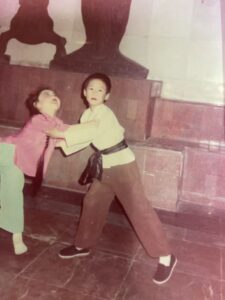
Before coming to the United States, I had already been actively engaged in composition, teaching, and commissioned creative work in China. My compositions, including works for dance and stage productions, received recognition at both regional and professional levels, including awards from cultural institutions and music competitions. At the same time, I worked as a lecturer and instructor at universities, teaching courses such as music theory, composition, and computer music. Through this combination of creative practice and teaching, I developed an approach that moves between artistic expression and structured learning environments. These experiences shaped my understanding of music not only as an art form, but as a medium deeply connected to cultural context and social function.
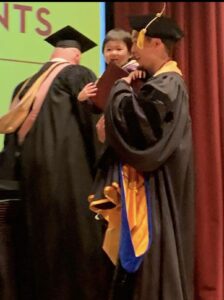
I came to Minnesota to pursue my doctoral studies in music composition at the University of Minnesota, where I later earned my Ph.D. My initial goal was to deepen my understanding of music as a structured system of expression. However, during my research, I became increasingly interested in how music can carry information—how it can translate ideas, emotions, and perception.
It was through this exploration that I encountered artificial intelligence. Rather than approaching it as a purely technological field, I experienced it as an extension of artistic inquiry—a tool that allows new ways of thinking about sound, perception, and meaning.
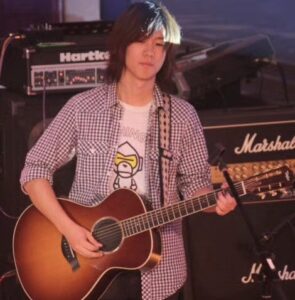
Since arriving in Minnesota, I have participated in educational and community-based initiatives that connect music, AI, and visual storytelling. I have also contributed to a range of creative and professional projects, including music for film, dance/theater productions, and invited educational roles, including guest lectures and evaluation panels for creative and technology-focused programs.
Through collaborations with Asia Media Access, I have been invited to contribute to initiatives that explore how technology can support creative expression while preserving cultural identity, particularly within immigrant and multicultural communities. Currently, my work continues to focus on interdisciplinary education and creative practice, supporting young people and communities in exploring how culture, creativity, and technology can coexist and grow together.
Q2. Please share more with us – How did your own cultural identity evolve while working in supporting other entrepreneurs? How has that work shaped your sense of belonging in both Chinese and American cultures?
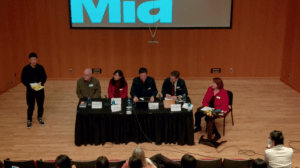
My cultural identity has evolved through movement—both geographical and experiential. In China, I was shaped by traditions that value continuity, discipline, and deep engagement with artistic forms. Music required patience, repetition, and a long-term relationship with both technique and cultural context.
When I began working in the United States, I encountered a different creative environment—one that emphasized experimentation, interdisciplinary collaboration, and openness. At first, these differences felt like contrasts. Over time, however, I came to understand them as complementary forces.
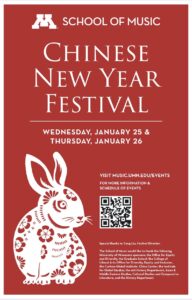
This shift became more tangible through my involvement in larger-scale artistic and community-based projects. For example, I served as the festival director for the Chinese New Year Festival (2023), hosted by the University of Minnesota School of Music. The festival brought together large-scale performances and academic forums, creating a platform for cultural dialogue across communities. Through organizing and shaping this event, I experienced how cultural expression is not fixed—it evolves through interaction, interpretation, and context.
I am proud of my cross-cultural, and cross-disciplinary works, few in MN has expanded to the field. My work in performance and composition further deepened this understanding. In projects such as the musical Shelter, which has been presented in multiple locations across the United States, including at the Tedd Mann Concert Hall in Minneapolis—where I contributed as an Assistant Music Director and percussion composer—I engaged with audiences in shared cultural spaces where storytelling, music, and identity intersect.
Similarly, my work in live film scoring—particularly in performances associated with Il Cinema Ritrovato On Tour – Minneapolis—allowed me to create live musical accompaniment for Chinese silent films using traditional Chinese instruments, presented to American audiences. In these moments, I was not only composing music, but navigating cultural perception in real time, translating meaning across different contexts.
In addition, through interdisciplinary collaborations, teaching, and mentorship, I have worked closely with individuals from diverse backgrounds. In these environments, I observed how identity is not something fixed, but something negotiated through interaction, creativity, and lived experience.
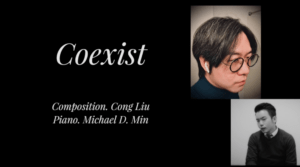
Through these experiences, my sense of belonging has shifted. It is no longer tied to a single place or definition, but to the ability to move between perspectives. Chinese culture provides grounding and depth, while American culture offers space for expansion and reinterpretation. Together, they form a way of thinking that is both rooted and adaptive.
For many immigrants, this duality is not something to resolve, but something to embrace. It allows us to build connections—not only between cultures, but between different ways of understanding the world.
Q3. How do you balance cultural authenticity while making your work accessible to others who may not be familiar with your cultural traditions?
Balancing authenticity and accessibility begins with recognizing that human experience is rooted in perception.
In my work, I often start with sensory elements—sound, rhythm, and emotion—because these are shared across cultures. Before people understand a concept intellectually, they can experience it physically and emotionally.
My personal experience has also influenced this approach. As someone who is colorblind, I have always been aware that perception is not universal. This led me to explore how color can be translated into sound—how something visual can become something audible.
This process is not only technical; it is philosophical. It asks how we define reality, and how different forms of perception can coexist. In teaching and creative practice, I try to create spaces where people can experience first, and understand later. Accessibility, to me, is not about simplifying culture, but about opening a pathway into it.
Q4. You have accomplished so much — from arriving at the States to becoming a cultural bearer. What were some of the pivotal challenges you faced in building your life in America?
One of the most persistent challenges I have faced is uncertainty—particularly within the structural conditions that shape immigrant life. This uncertainty affects not only stability, but also one’s ability to plan, to build, and to imagine the future.
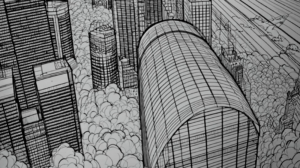
Another challenge has been learning to navigate unfamiliar systems. Educational environments, professional expectations, and social dynamics all require continuous adaptation. At the same time, working within diverse communities has made me more aware of broader challenges, such as unequal access to resources, limited representation in the arts, and barriers faced by immigrant populations.
These experiences gradually shaped my understanding of responsibility. In this process, I began to see my work not only as a form of artistic practice, but also as a way of connecting people and cultures. My work itself reflects the intersection of Eastern and Western cultural perspectives. It carries the traces of my own evolving identity as I move across different environments, and becomes a tangible expression of how cultural understanding shifts and takes form. In this sense, my creative work serves as a living example of how cultures interact, transform, and become accessible through experience.
At the same time, I have been working in a period marked by the rapid development of artificial intelligence. To me, AI should not replace human identity, but amplify it. It allows me to integrate past experiences, present contexts, and cross-cultural understanding into new forms of expression. Through this process, my work has gradually become a bridge between cultures. Whether through performance, education, or interdisciplinary collaboration, I aim to create spaces where unfamiliar cultural forms can be experienced and understood in accessible ways.
In a multicultural society like the United States, this kind of work contributes to dialogue, mutual understanding, and a more inclusive cultural environment. It is not only about artistic expression, but also about how people come to understand one another across differences.
Q5. Love your statement “Art and technology should not replace human identity, but amplify it.” Reflecting on that journey, what impacts do you hope having on the next generation?
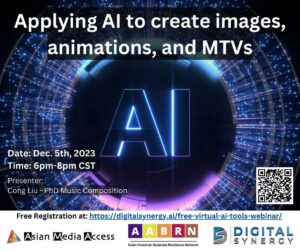
AI, to me, is not a substitute for creativity, but a tool that expands my vision and transforms imagined ideas into tangible forms.
My relationship with AI did not begin with technology—it began with curiosity. I wanted to understand how music communicates, how perception works, and how ideas can be translated across forms. Over time, I came to see AI as an extension of that inquiry. It allows us to make visible—or audible—things that were previously difficult to express.
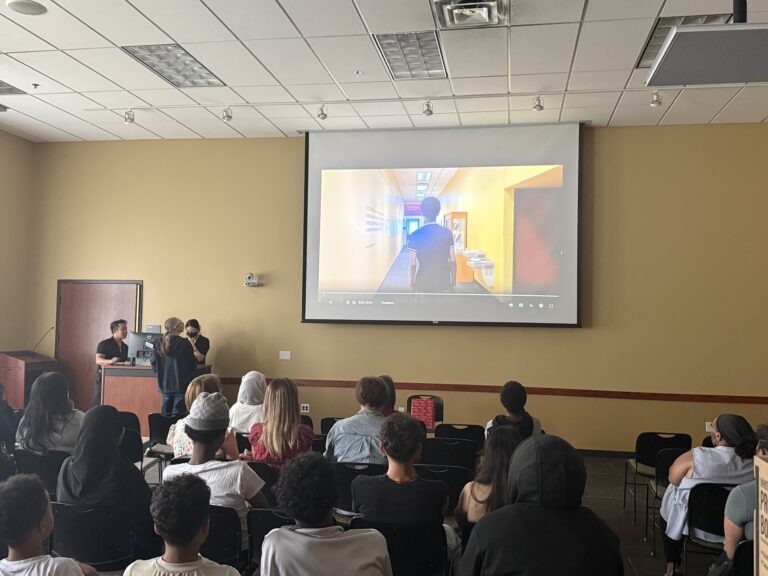
At present, I am involved in community-based educational initiatives, including participation in AI-focused 2D and 3D storytelling programs in St. Paul, as well as supporting music recording and production workshops with students at Minnesota Preparatory Academy. These efforts are not only about teaching skills—they are about creating spaces where young people can explore who they are, how they want to express themselves, and how their voices can connect with others.
In my teaching and workshops, I often encourage students to share their work with one another, to respond to each other’s ideas, and to see creativity as something that develops through interaction rather than in isolation. Through this process, they begin to recognize that their creative choices—what they express, how they present it, and how they engage with others—can shape how people feel, think, and connect.
In this sense, creativity is not only about personal expression, but also about participation: contributing to shared experiences, telling stories that resonate beyond oneself, and helping others feel seen and understood. At the same time, I hope they can understand that individual perspectives and collective thinking are not in conflict. Instead, they can coexist through dialogue—through brainstorming, exchange of ideas, and collaborative creation. It is within this process that individuals learn to think not only from their own perspective, but also from the perspective of a community, developing awareness of how their ideas and actions can contribute to something larger than themselves.
For the next generation, I hope they will not see technology as something separate from culture, but as something that can carry it forward. They should feel empowered to use new tools without losing their sense of identity. Ultimately, I hope they will learn to create with awareness—with an understanding that creativity is not only about innovation, but also about meaning, connection, and responsibility.
Q6. Any final words for our readers?
I often think about how tradition and innovation are not opposites, but part of the same process. Over time, I have come to feel that “this duality is not something to resolve, but something to embrace.”
In my own journey, moving between cultures has shown me that what feels unfamiliar at first can become a source of creativity and understanding—if we are willing to stay open to it. Much of what I do now grows out of this experience. Working with students, communities, and young creators in Minnesota—through advanced AI storytelling programs in St. Paul and music production workshops at Minnesota Preparatory Academy—I see how powerful it can be when people are given space to explore who they are and how they connect with others.
I believe this is where my contribution begins – it is not only about what I create, but about how we create spaces where people can listen, share, and understand perspectives beyond their own. I believe the United States has something very special—so many different cultures, ideas, and ways of seeing the world coming together in one place. When we approach that diversity with curiosity and respect, it becomes a strength, not a challenge.
And in that space, people who move between cultures and languages can help connect those worlds—not by replacing one with another, but by helping them speak to each other. So if there is one thing I would share, it is this: culture is not something fixed. It grows through interaction. And each of us has a role in that process—through how we listen, how we create, and how we connect.