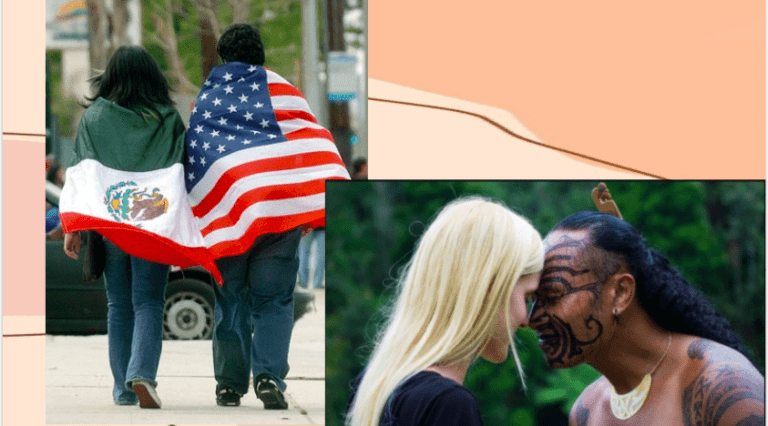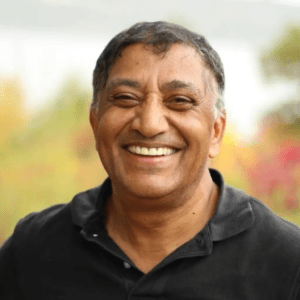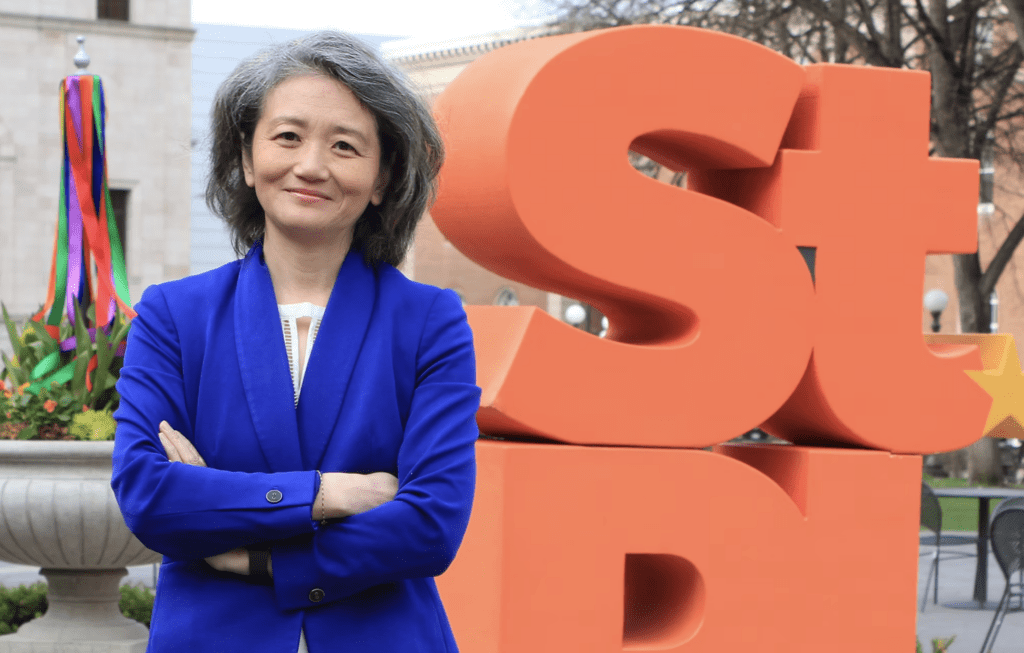
Preface: In this “Calling America HOME” edition, we feature Dr. Yan Chen—an immigrant from Shanghai, China, and a scientist turned politician. She reflects on balancing Chinese and American cultures, learning from NATURE to navigate complexity and sustainability, and transforming challenges into opportunities. Though she did not win the St. Paul mayoral election last November, the journey expanded her vision in ways she never imagined.
Q1. Thank you, Yan for speaking with AMA. Can you begin by introducing yourself and describing your journey to Minnesota?
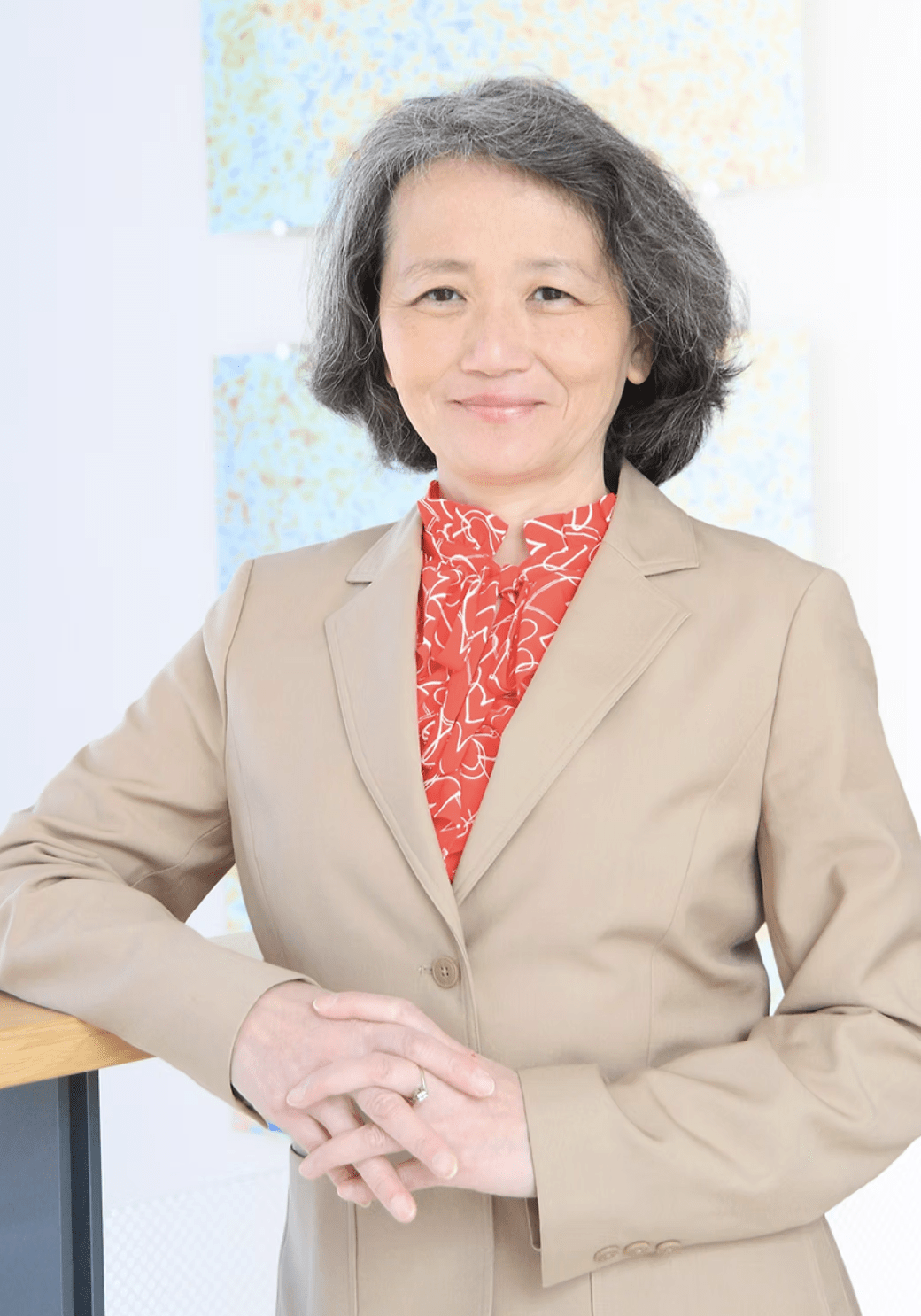
I am Yan Chen. I am a proud immigrant and scientist, came as a foreign student, got my PhD, worked more than 20 years at the University of Minnesota and retired at 2020. I live in the Summit–University area of St. Paul. I started a business in the city around 2010, and decided to run for St. Paul City Council in Ward 1 in 2023 and for Mayor of St. Paul in 2025.
I was born in Shanghai, China, in the midst of the Cultural Revolution. By the time I reached my teenage years, China had begun to change, and to reflect on the damage the Cultural Revolution had caused. When I left China for the United States in 1989 when I was 19, China was opening up, but I had no idea how quickly both China and America would change in the decades to come.
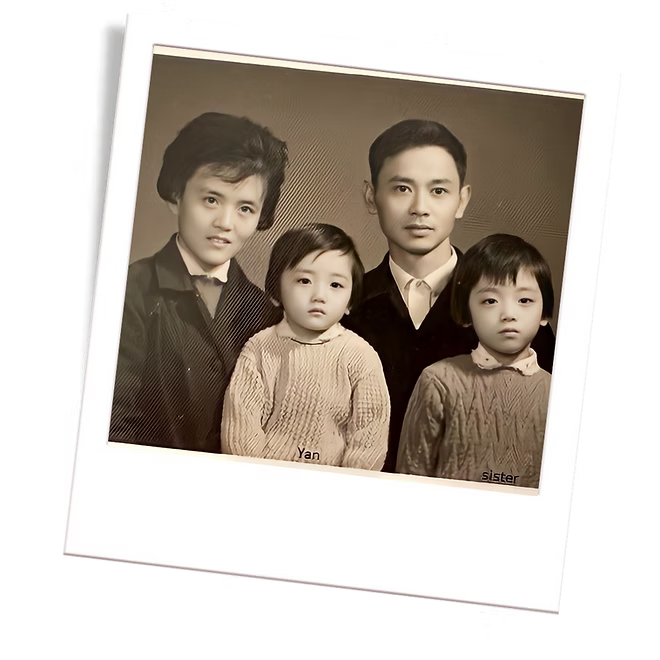
Because my formative years were shaped by reflection on the Cultural Revolution, one lesson was deeply ingrained, by my parents and by Chinese culture more broadly: do not get involved in politics. Politics, we were taught, was not for people who were sincere at heart. It was about manipulating emotions. The Cultural Revolution itself was built precisely on that, manipulating young people’s emotions with devastating consequences.
Arriving in America was not easy. Like many immigrants with little institutional or family support, I learned to adapt, prioritize and thrive through hard work. I earned my bachelor’s degree in Chemistry from the City College of New York and my PhD in Biophysics from the University of Illinois at Urbana–Champaign.
In 2000, I moved to Minnesota to continue my research career in Biophysics. We were doing truly cutting-edge work, developing techniques that allowed us to study complex biological systems with tools we have developed. It was an extraordinary period, one that combined intellectual freedom with scientific rigor.
Around 2010, however, I began to notice how profoundly government policy could shape the kind of science we were able to do. I became increasingly concerned about the direction of science policy. At the same time, another long-standing passion resurfaced: my deep care for nature and the environment.
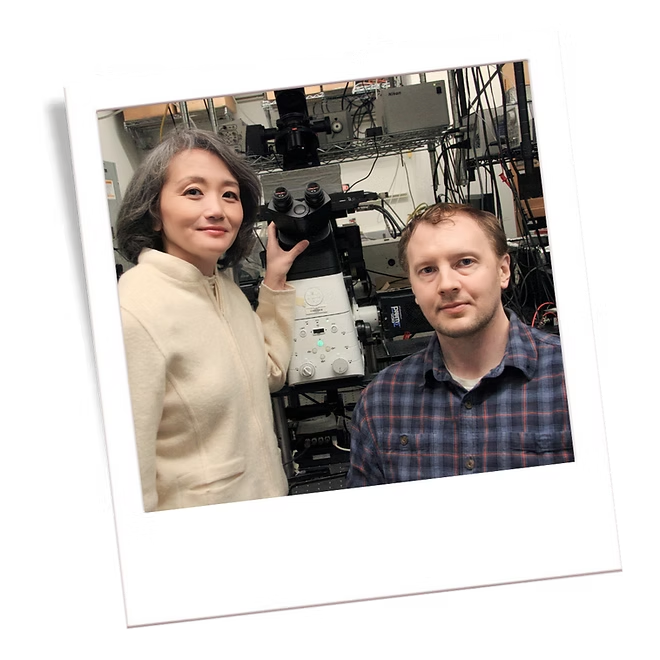
My research focuses on the microscopic world, proteins and cells, but biology teaches powerful lessons. Cells are remarkably efficient and sustainable systems. When I began thinking seriously about my kids’ future, I have two, I found myself asking a larger question for the first time: How sustainable is human society? That was when politics entered my thinking, not as ideology, but as a system that can either enable meaningful work or make it unbearable. In 2017, I first considered the idea of engaging in politics, driven by environmental concerns.
In 2022, I decided to step into local politics by running for City Council in Ward 1. With no prior political experience, I began by doing what I knew best, studying the city budget to understand how our government actually works. What I found was deeply troubling. The numbers alone pointed to an unsustainable trajectory if nothing changed.
At first, I assumed I must be missing something. After all, a city has far more resources and expertise than any individual resident. But when I began door-knocking across Ward 1, I kept hearing the same concerns from neighbors that the budget data had already revealed.
Q2: That is such a turning point – connecting what you do best- research and problem analysis -into a practical tool that can help others. Could you share more about your key findings on how government can operate more efficiently and sustainably?
Government must be competent to function efficiently and sustainably. When it is not, tax dollars are spent ineffectively and people’s daily lives do not improve. Over time, public trust erodes. Once trust is lost, the consequences for society can be devastating: civic disengagement increases, polarization deepens, and extreme voices gain influence.
The real question, of course, is how we evaluate government competence. This is neither simple nor superficial. It is nuanced. This is where my training as an experimental scientist becomes highly relevant. Scientists are trained to evaluate complex systems, isolate variables, test assumptions, and determine whether outcomes actually match intent. On paper, everything can look perfect. But when we examine the details, priorities, incentives, timelines, and feedback loops, small mismatches can compound and cause an entire system to underperform.
I believe our city’s departments need to be re-examined through this systems lens. Some are performing well and should be protected and supported. Others may need refinement or better alignment. Our city employees are highly skilled and deeply dedicated civil servants. The challenge is not a lack of talent; it is identifying the missing links so their skills can be applied where they create the greatest public value.
Efficient and sustainable government is not about ideology. It is about competence, structure, coordination, and continuous improvement.
Q3. Please share more with us — How has your cultural identity evolved as you’ve forged your own path in science, business, and politics — especially in those fields where Asian women have historically been underrepresented. How has that shaped your sense of belonging?
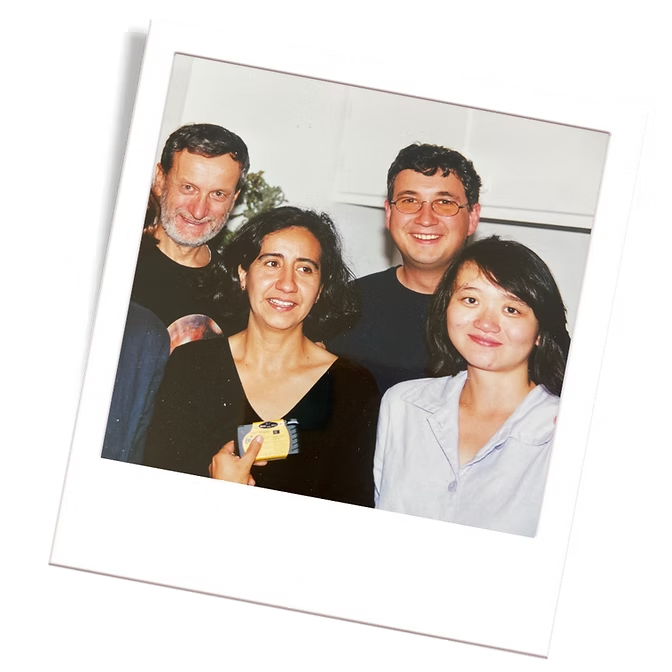
There have been two periods in my life when I relied deeply on my Chinese heritage to get through difficult times.
The first was when I immigrated to the United States. I was thrown into an entirely new culture and, in many ways, forced to become an adult overnight. During that period, I often recalled the Chinese proverbs I learned in elementary school, usually taught as short stories, about how to endure loss, how to remain honest with oneself, and how to keep one’s inner compass when the external world feels unstable.
The second period began when I decided to enter politics. As a scientist, I had spent most of my life working with data and systems rather than navigating human power structures, let alone thinking about how to govern. I found myself asking a fundamental question: What is my philosophy of governing? For the first time, I turned deliberately to books on Chinese wisdom that explore both governance and what it means to be fully human.
What I found was a philosophy centered on quiet strength, leading not through domination, but through nurturing and guiding. Most importantly, it emphasized authenticity: the idea that effective leadership begins with being truthful to one’s own heart. That principle has stayed with me, shaping not only how I think about governing, but also how I understand my responsibility as a human being within a larger community.
Q4. Love your statement “how I understand my responsibility as a human being within a larger community.“ How do you balance cultural authenticity with the need to integrate into larger society to have more diverse support ?
I am deeply grateful for what I have learned in America and Western culture. I have learned the importance of freedom and of scientific rigor, both are essential foundations of a healthy society.
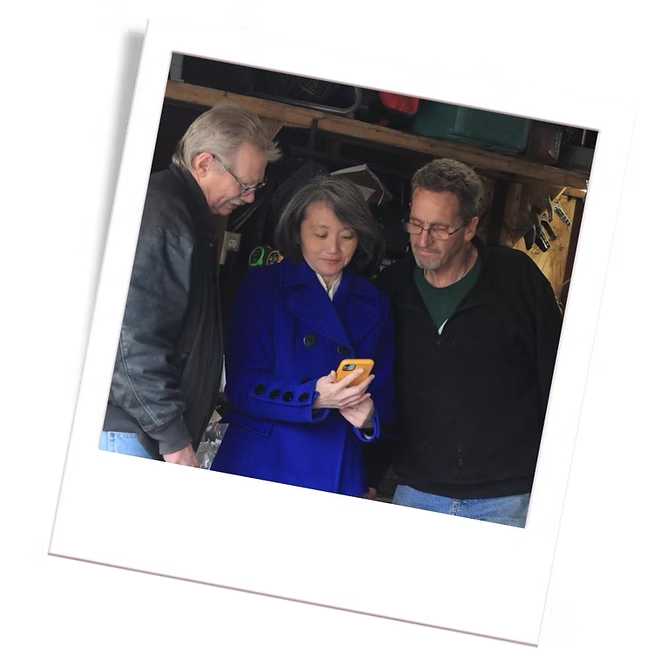
But freedom is not self-executing. For freedom to be truly available to everyone, individuals must develop strong internal guide rails. No one is born with these tools. Some people acquire them through experience and reflection; others struggle without clear guidance. That is why it is necessary to make these guide rails as visible and understandable as possible, so people fully grasp the responsibility and consequences that come with the freedom a society chooses to provide.
At its core, this is about BALANCE.
I believe Asian culture has much to offer in this conversation, particularly its emphasis on self-cultivation, restraint, and responsibility. By finding a voice that is authentic to ourselves, we can help bridge freedom with responsibility, and individual rights with collective well-being.
Q5. Indeed, the Asian philosophy of “BALANCE“ is such a key tool, what other challenges did you face as an immigrant business owner and cultural ambassador, and how did you overcome them?
Like everyone else, we all face many challenges. At some point in life, I became comfortable with challenges, because I realized they are the best playground for discovering who we truly are. If we can embrace challenges instead of avoiding them, then over time we become more confident, resilient, and wiser in how we deal with life.
Q6. What impact do you hope your work has on the next generation?
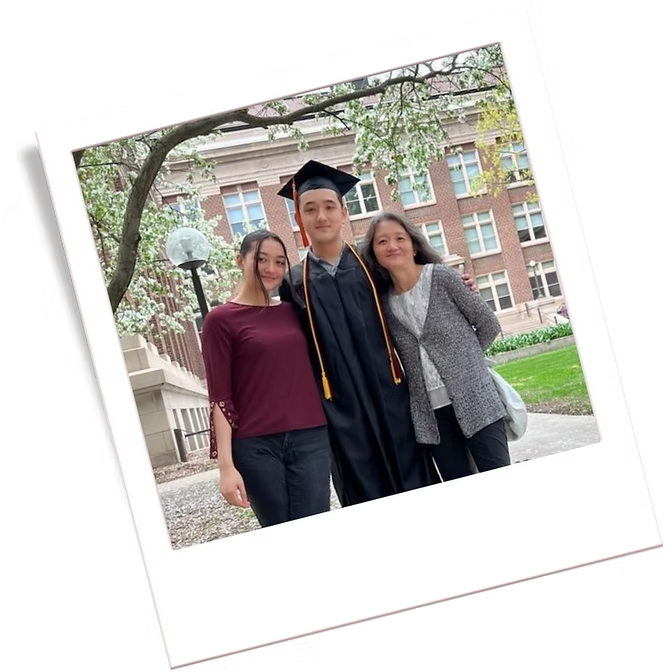
That is an excellent question. During my campaign, I did not speak extensively about the next generation beyond housing, yet younger people today face extraordinary challenges: fragmented information ecosystems, shrinking and shifting job opportunities, and the growing threat of climate instability.
Rather than viewing these forces only through a lens of pessimism, I believe older generations have a responsibility to help younger people adapt, thrive, and find their own paths in an increasingly complex world. I hope my work encourages the next generation to see their background not as something to hide or overcome, but as a source of strength and clarity. Each person’s lived experience, cultural, intellectual, and ethical, is an asset. America’s greatest potential lies in its ability to integrate diverse experiences into thoughtful, responsible leadership.
My message to the next generation is simple: embrace who you are and discover your own strengths. By doing so, and by working together, we can build a sustainable society, one that has never existed in quite this way before, but is uniquely possible in America. I want young people to believe that authenticity, rigor, and collaboration are not weaknesses in public life, but the very foundation of a humane, innovative, and enduring society.
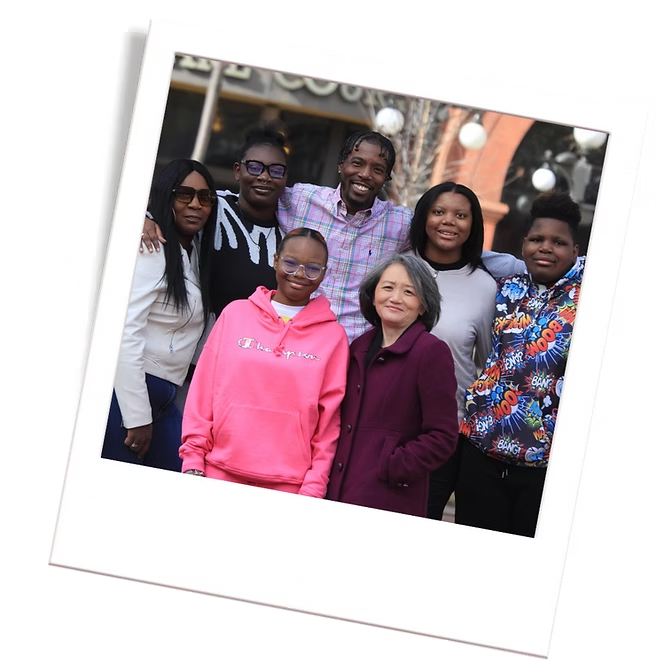 Q7. Thank you so much for these uplifting statements. Any final thoughts for our readers?
It takes a great deal of experience to eventually understand who we are. Embrace every experience, regardless of what you have done or where you are in life. When you remain open to learning, from your own journey and from others, you will find your own voice in time, even in moments that feel dark or uncertain.
Right now, many of us feel a deep sense of disbelief about what is happening in America. I believe the root cause of many of our problems is that government has spent enormous resources trying to solve issues, yet too often fails to deliver meaningful results. In the 37 years ,I have lived in this country, I have witnessed a noticeable decline in public morale and confidence.
The founding fathers of the United States, shaped by the failures and abuses they witnessed in their own lives, anticipated many of the governance problems we face today. That is why they designed a system with a clear separation between the executive and legislative branches, to prevent power from becoming concentrated in any single place.
Unfortunately, in practice, this separation is rarely carried out or even well understood. I believe the executive branch should focus on what it is meant to do: run city, county, state, and federal departments competently, solve real problems, and improve residents’ daily lives.
A competent executive branch is a competent government. The best way forward is not sweeping ideological battles, but careful, disciplined fine-tuning of the executive branch, starting at the local level. Every department must be understood as a complex system and optimized for top performance. This does not require a chainsaw; it requires deep understanding, patience, and the discipline to improve systems thoughtfully and incrementally.
It will take a unique combination of perspectives and skills to solve the problems America is facing. Let us take this opportunity to honor America’s belief in freedom and individual rights by working together to demonstrate that diversity is an asset, not a liability.
I have answered many of the questions residents have raised on my website, https://www.yanchenmn.com/faq and I plan to continue these conversations in greater depth on my YouTube channel, @YanChen-MN.
Let us keep our minds open and allow the American experiment to continue.